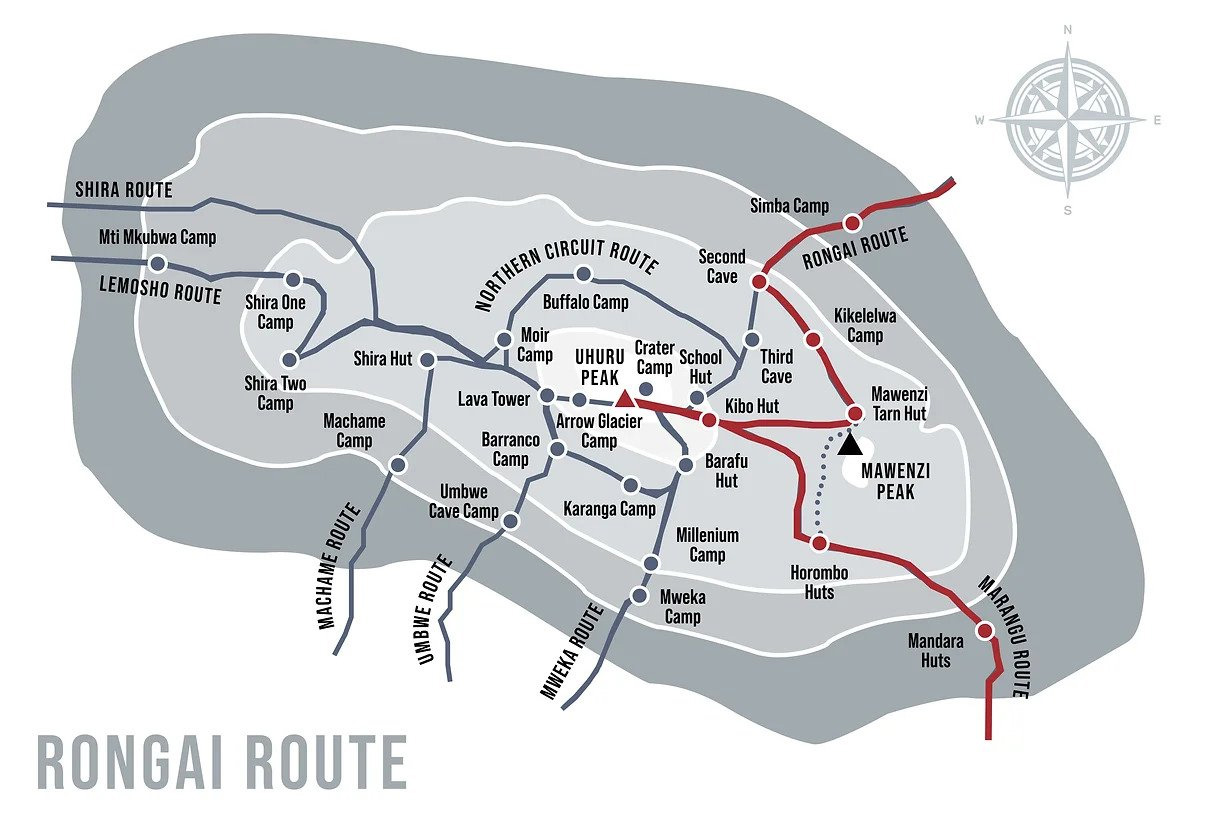
The 7-Day Rongai Route Kilimanjaro is the hidden gem of Kilimanjaro climbing. As the only route approaching from the north (near the Kenyan border), it offers a completely different perspective of the mountain. It is famous for being the driest route, making it the ideal choice during the rainy seasons (April, May, November), as the northern slopes lie in the mountain’s rain shadow.
Unlike the steeper western routes, Rongai offers a gradual, steady ascent that is excellent for acclimatization. It is also significantly quieter, allowing you to experience the true wilderness of Kilimanjaro away from the busy crowds. You will trek through pine forests, pass majestic volcanic caves, cross the barren “Saddle” between Mawenzi and Kibo, and descend via the classic Marangu route, giving you a complete traverse of the mountain from north to south.
Your adventure begins with a scenic drive from Arusha, winding around the eastern side of the mountain to the Nale Muru village near the Kenyan border. After signing in at the wooden Rongai Gate, the trek begins.
Unlike the jungle-heavy start of other routes, Rongai begins in a mix of pine forest and potato fields before entering the montane rainforest. The trail is wide and gradual. As you climb, keep an eye out for Colobus monkeys in the trees. You will arrive at Simba Camp (Swahili for “Lion”) on the edge of the moorland zone, offering sweeping views over the Kenyan plains of Tsavo.
Today is a steady, enjoyable climb towards Kibo Peak. We leave the forest behind and enter the heath zone, dominated by aromatic shrubs and wildflowers.
The trail is gentle, allowing you to enjoy the solitude. You will pass First Cave before continuing the ascent toward Second Cave Camp. The views of the Eastern Ice Fields on the crater rim start to open up here. We arrive at camp for a hot lunch and a relaxing afternoon, crucial for saving energy for higher altitudes.
This short day is designed to aid acclimatization. We trek across the open moorland, heading closer to the jagged spires of Mawenzi Peak, the second-highest volcanic cone on Kilimanjaro.
The trail gets steeper as we approach Third Cave Camp. You are now in the semi-desert zone, where the air is noticeably thinner. Use the afternoon to rest and hydrate. The sunset here, illuminating the peaks of Kibo and Mawenzi, is spectacular.
This is often cited as the most scenic day on the Rongai Route. We ascend steadily into the “Saddle,” the broad, lunar-like landscape that connects Kibo and Mawenzi.
We set up camp at Mawenzi Tarn Hut, situated beneath the towering, craggy spires of Mawenzi Peak. The camp is located next to a small mountain lake (tarn), adding to the dramatic beauty. The afternoon is free for a short acclimatization walk up the ridges for better views, or simply resting in this otherworldly amphitheater.
Today we cross the full expanse of “The Saddle.” It is a stark, barren desert of alpine stone, exposed to the wind but incredibly beautiful in its desolation. You will walk with the summit of Kibo directly in front of you—a constant reminder of tonight’s goal.
We arrive at Kibo Huts (the same base camp used by the Marangu route) in the early afternoon. This is where the two routes converge. Eat an early dinner and try to sleep immediately; your wake-up call for the summit push will be at 11:00 PM.
The “Big Day” begins at midnight. We ascend by headlamp, trudging up the steep volcanic scree toward Gilman’s Point (5,685m) on the crater rim. This is the toughest physical challenge of the trek.
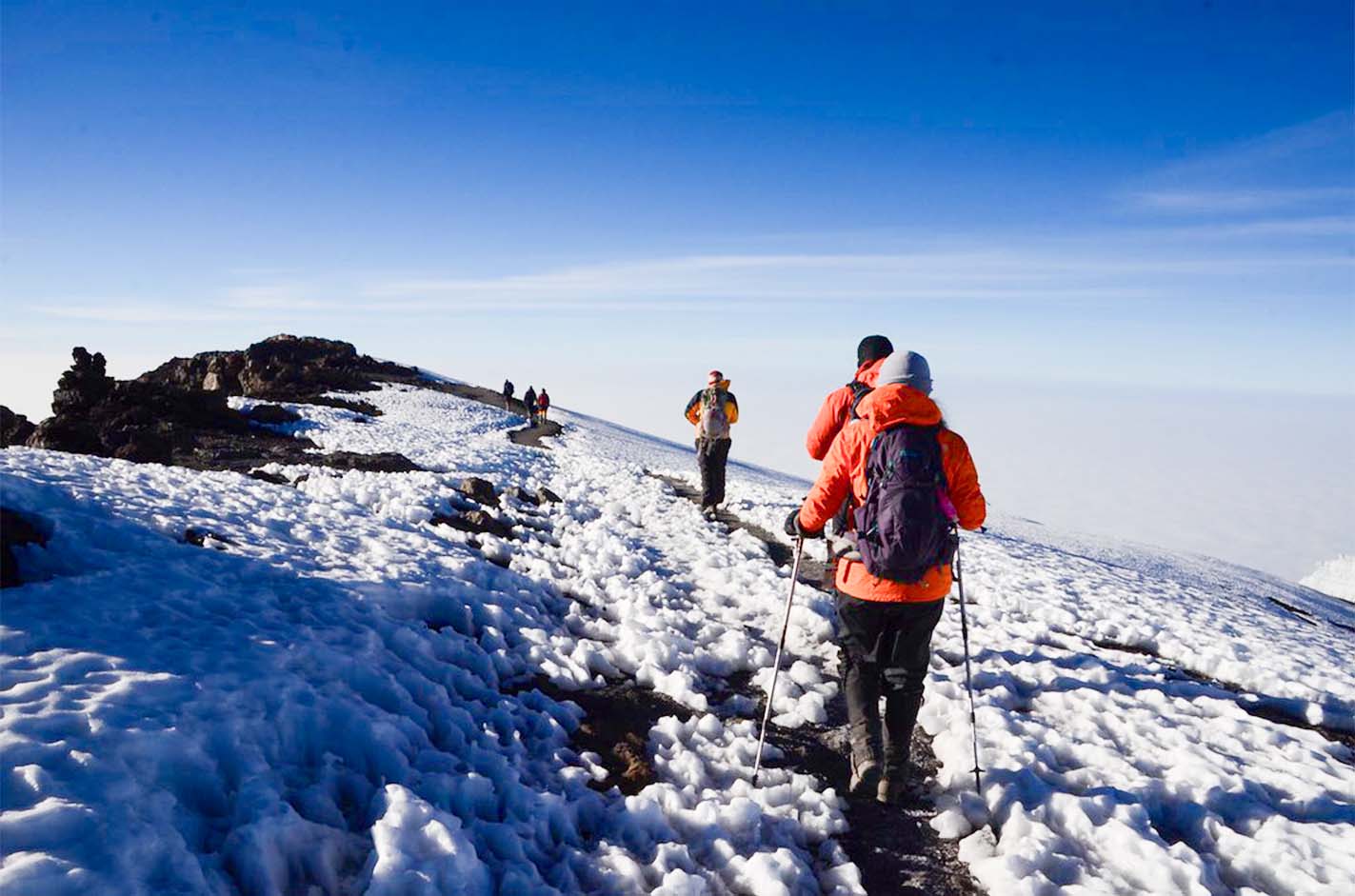
Once at Gilman’s, you are greeted by a stunning sunrise over Mawenzi. From here, the snow-covered trail flattens slightly for the final push to Uhuru Peak (5,895m). Congratulations, you are on top of the world!
After photos and celebration, we descend back to Kibo for a quick lunch, repack, and continue down to the lower altitude of Horombo Huts for a celebratory dinner and sleep.
The final descent is a long, easy walk. You re-enter the lush rainforest, passing Mandara Huts on the way down. The air gets thicker, warmer, and richer with oxygen.
At Marangu Gate, you will sign out and receive your summit certificate. After saying goodbye to your porters and guides, our vehicle will be waiting to drive you back to Arusha for a long-awaited shower and rest.
Book your Tanzania safari with Kilinyota Safari and explore Africa with confidence.We respond within 24 hours. Your information is safe and never shared.