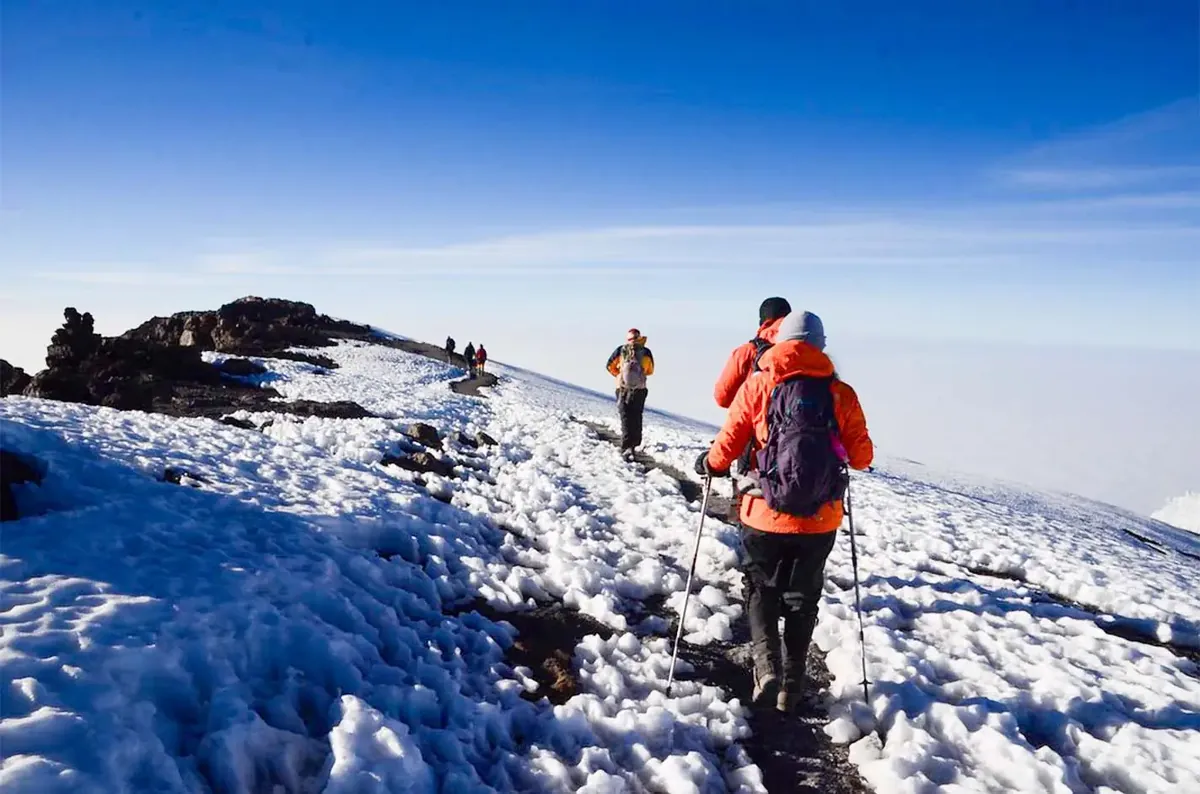
Route choice on Kilimanjaro is really a choice about acclimatisation. The mountain is not technical; altitude is what turns climbers back, and the routes that spend longer high before summit night succeed most often.
Machame — the popular all-rounder
Six to seven days, dramatic scenery and a profile that climbs high and sleeps low through the Barranco Wall. Busy, but well paced and reliable.
Lemosho — the best balance
Seven to eight days from the west, quiet in the first two days, then joining the Machame line. The extra day makes a measurable difference to how you feel on summit night. Our most recommended route.
Northern Circuit — the longest and highest success
Eight to nine days circling the northern slopes. The most time spent acclimatising, the quietest trails and 360-degree views. Best for trekkers who want the strongest odds and have the days.
Rongai — the dry-side option
Six to seven days from the north-east, in the mountain’s rain shadow, which makes it the sensible choice in marginal months. Gentler gradients, less variety.
Marangu — huts, not tents
Five to six days, the only route with dormitory huts. The shortest profile means the weakest acclimatisation, so we add a day whenever a climber chooses it.
Umbwe — for experienced climbers only
Steep, direct and fast, with little time to adjust. Suitable only for trekkers with proven altitude experience.
What matters more than the route
- Adding a day: the single biggest change you can make to your odds
- Walking slowly — pole pole — from the first hour
- Drinking three to four litres a day
- A crew that monitors oxygen saturation and pulse daily
Tell us your fitness, altitude history and how many days you have, and we will recommend one route rather than six.